Warfare Officer
Skip to section:
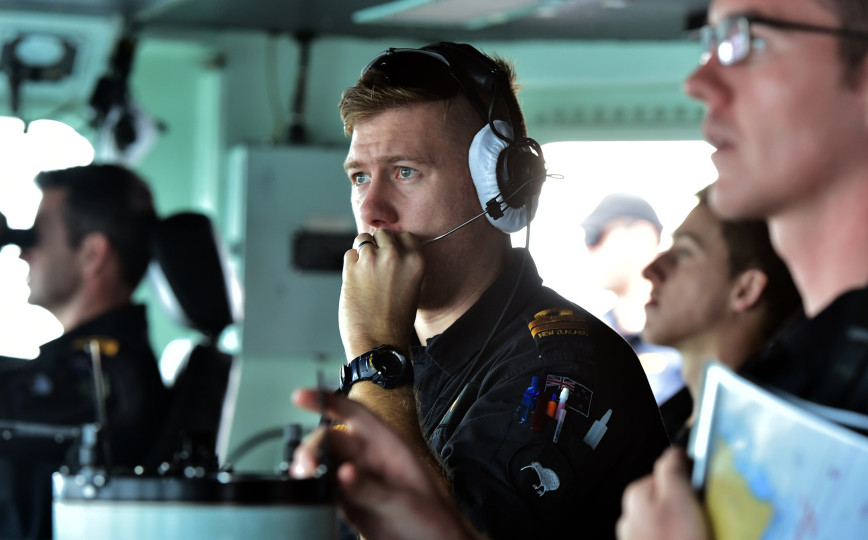
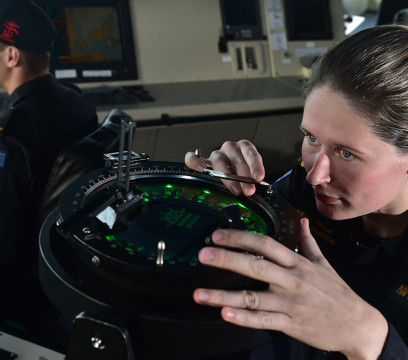
About the role Career progression and training Salary and benefits Entry requirementsWarfare Officers ‘drive’ the warships. You work on the ship’s bridge, control the ship's manoeuvring, are responsible for the safe passage and navigation of the ship at sea, and manage the bridge staff.
- ServiceNavy
- SpecialisationNavigation, Combat and Security
- LocationDevonport
-
Starting Trade Training$61,911
About the role
In the Navy, Warfare Officers ‘drive’ and command the warships. You initially work on the ship's bridge, control the ship's manoeuvring, are responsible for the safe passage and navigation of the ship at sea, and manage the bridge staff and ship routines while on watch. During wartime, or simulated manoeuvres and exercises, you will additionally need to assist in identifying enemy aircraft, submarines and other warships and manoeuvring the ship to avoid their weapons. At these times you will assist the Commanding Officer as part of the ship's warfare team which includes the Principal Warfare Officer who will be in the Operations Room directing fire of the ships weapons.
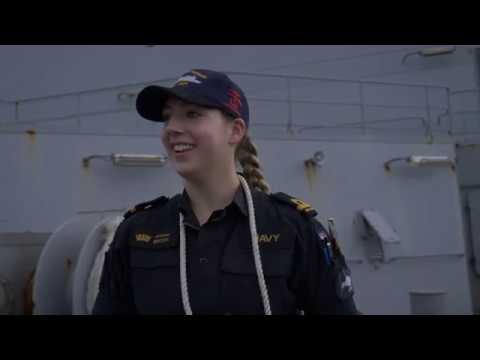
The job wants you to be the best you. You don't have to be a certain type of leader, you don't have to be a certain type of person, you just have to work hard and be yourself.
Joanna Brook
Career progression and training
Career Progression
Basic Training
Job Training
Specialist Training
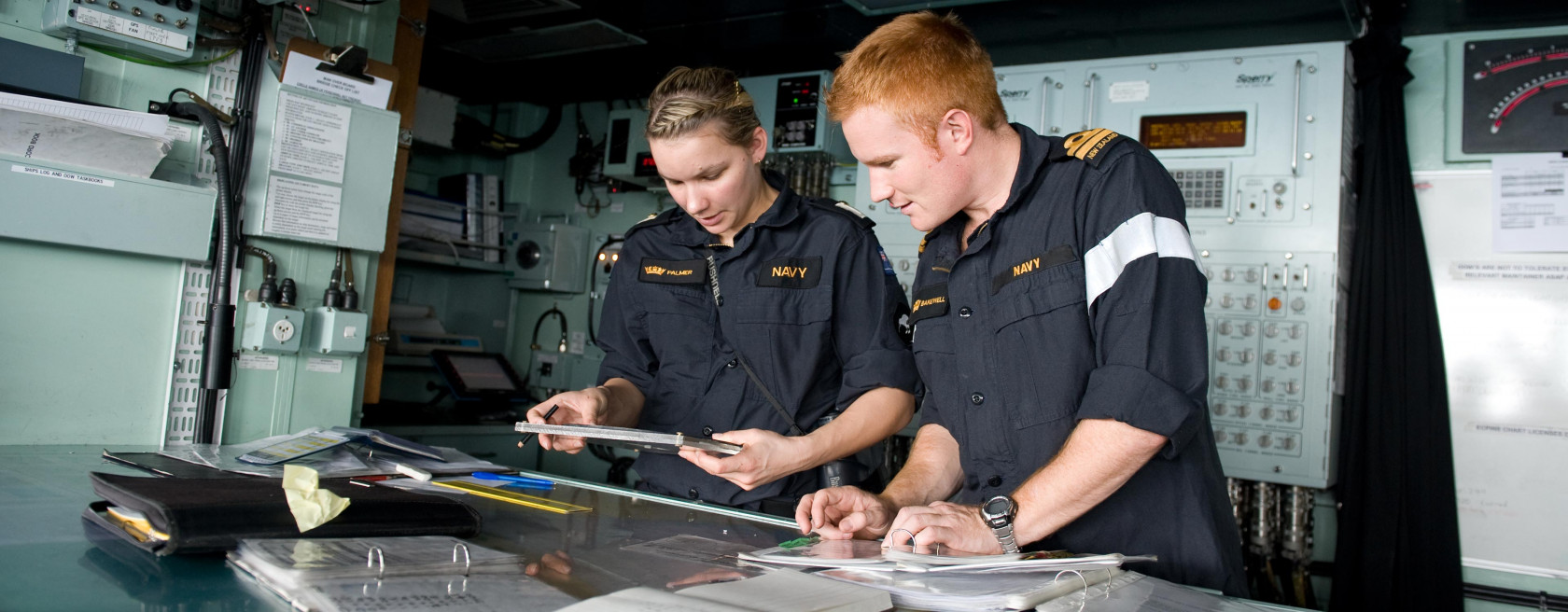
Early in your career you will spend the majority of time at sea, and will be posted to various ships as an Officer of the Watch (OOW). You will complete some courses ashore but will invariably be posted to seagoing ships that are typically away from the Devonport Naval Base for around seven months of the year. You will participate in operational missions, and visit ports throughout the world.
After gaining four to seven years’ experience you may choose to specialize as Navigating Officer, Principal Warfare Officer, Hydrographic Survey Officer, Mine Clearance Dive Officer, Helicopter Pilot, Observer, or fill other important roles within the RNZN ashore.
Each Warfare Officer's career is unique, and the specialisation chosen will determine future courses, postings and promotion opportunities. All the ships within the navy have differing capabilities that provide a variety of roles and specialisations for Warfare Officers, as well as providing the opportunity to become Commanding Officers early on in your career. Senior seagoing Commands, such as those on the ANZAC Frigates, follow periods of shore appointments, advanced professional and specialist training and lengthy seagoing experience.
Junior Officer Common Training (JOCT)
(21 weeks) Location: Devonport Naval Base
The objective of JOCT is to provide you with the core skills of military, mariner, and leadership to be an effective Officer in the Navy. The course is completed in two phases of training that train key areas of development.
Phase 1 – Introduction
This phase focuses on ‘followership’ and teamwork. Trainees are instructed in basic service knowledge, discipline, parade, and kit preparation. Physical Training will be conducted at all times throughout training to develop a high level of physical and mental fitness that promotes morale, good health, and good habits. This phase will cover various topics including:
- Physical Fitness
- Service Knowledge
- Service Discipline
- Introduction to the Leadership Development Framework
- Damage Control Training
- Weapons Training
- First Aid
- Basic seamanship training
- Moving to advanced application
Phase 2 – Fit for Sea
The second phase of training will focus on attributes of being in the Navy in preparation for operational service at sea. Trainees will be taught about the roles and responsibilities on board an RNZN ship. Trainees will also spend time ashore conducting academic and leadership training to further develop as a Naval Officer. This phase will cover various topics including:
- Sea survival
- Ship familiarisation
- Leadership training
- Communications skills
- Defence and Strategic Studies
Basic Officer of the Watch (OOW(B)) Course
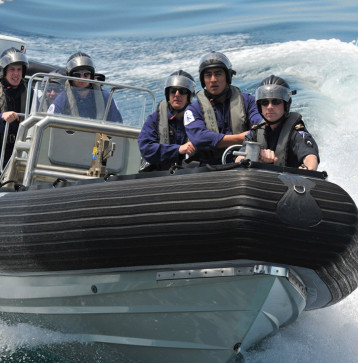
The aim of this 16 week course is to teach the basic principles and processes of navigation and good bridgemanship, which includes experience in a world class bridge simulator, and culminates in assessments at sea navigating a small naval vessel. You will learn basic skills necessary for your future as an Officer of the Watch including how to plan a coastal passage, conducting a basic pilotage, launching RHIB’s (rigid hull inflatable boats) safely while underway, and dealing with emergencies like machinery breakdowns or retrieving a man overboard.
On completion of your OOW(B) course you will spend 6-12 months aboard a navy ship consolidating everything you learnt on course under supervision of an experienced Officer of the Watch. You will need to complete a task book that covers key competencies as an OOW(B) during this time. Depending on how you apply yourself, after just a few weeks you may gain a platform endorsement for that particular ship, meaning you can drive the ship without supervision. This on-the-job training is aimed at preparing you in a practical sense for the Bridge Warfare Officer (BWO) Course as a Warfare Officer of the Watch (OOW(W)).
Warfare Officer of the Watch (OOW(W))
Gaining an OOW(W) qualification and experience is essential if you aspire to specialize as a Principal Warfare Officer (PWO) or Command an RNZN vessel. You must complete the BWO Course to gain this qualification, a requirement for promotion to the rank of Lieutenant, which will open opportunities to specialise in other warfare officer trades later in your career.
An OOW(W) qualification means you can drive the ship during the most complex situations, for example during gunnery and launching torpedoes. On completion of the BWO Course, you will further consolidate your training at sea and gain a platform endorsement as an OOW(W). There are overseas exchange opportunities to gain this qualification as well, dependant on COVID-19 border protocols at the time. Once you are a platform endorsed OOW(W), you will be regarded as a senior member of the Bridge team, permitted to drive the ship in both peacetime and wartime environments.
Warfare Officers can either choose to join with a specialisation in Mine Clearance Diving or Hydrography. In addition, once you are a qualified Warfare Officer, and have consolidated your qualification at sea, you may choose a sub-specialisation to pursue. These options include: Mine Clearance Diving Officer (MCDO), Hydrographic Survey Officer, and Principal Warfare Officer (PWO), Pilot, or Airborne Tactical Officer.
Mine Clearance Diving Officer (MCDO)
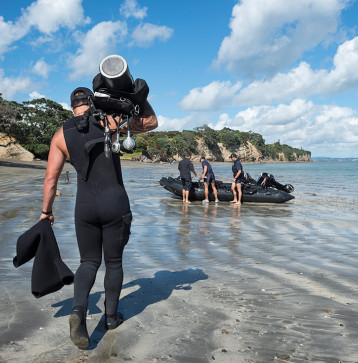
Mine Clearance Diving Officers are the Navy's experts in Clearance Diving, Mine Counter Measures, Under Water Engineering, Explosive Ordnance Disposal and Improvised Explosive Device Disposal. As a MCDO, you will complete your Warfare Officer training, and then specialise in Diving, completing the Defence Diver course, Diving Supervisors course and specialist Clearance Diving and Mine Warfare courses in Australia or the UK. On successful completion of courses and consolidation in trade, you will be awarded the MCDO Badge.
As a MCDO, you will primarily work as part of HMNZS MATATAUA in one of the clearance diving teams, as well as at sea on our Diving Support vessel HMNZS MANAWANUI. Your career will be focused on the work the Operational Dive Team do and working as a part of them in a range of environments.
The role of an MCDO is demanding physically and mentally. It is not for the faint hearted. An MCDO needs to be fit and be able to work in extremely difficult and testing conditions.
Hydrographic Survey Officer
Naval Hydrographers are responsible for generating and maintaining charts to ensure the safe passage of all ships. Hydrographers are also involved in surveying areas for beach landings as a part of the Advanced Force Operations team. In addition to general Officer of the Watch duties, Hydrographic Survey Officers complete survey management and data processing, including ship handling, use of specialised sounding equipment, and processing data at sea and ashore. Find out more about this specialisation here.
Principal Warefare Officer (PWO)
A PWO is required to have full knowledge of all weapon systems and sensors to ensure the ship is able to respond to any changing scenario. A PWO is also required to maintain up to date knowledge and the latest war fighting tactics so as to effectively defend the ship against attack.
When working ashore, PWOs often find themselves in positions conducting planning, providing training, or improving processes and procedures. These roles vary in location but are usually conducted in Devonport or Wellington. Occasionally this role will allow opportunities to travel overseas including to the; UK, Australia, Middle East, United States, Canada, and more.
Warfare Officers holding the rank of Lieutenant for a minimum of two years and holding a Bridge Watch Keeping Certificate (Advanced or Warfare) are eligible to be selected for PWO training. RNZN officers spend 13 months in the UK completing the PWO course.
Salary and benefits
Careers in the Navy are well-rewarded, as well as being diverse and exciting. As you become more experienced and move up through the ranks, gaining additional skills and qualifications, you will see your salary rise accordingly.
While undertaking Officer Training you will hold the Rank of Midshipman. On graduation from your commissioning course, your rank and pay will increase based on your trade speciality and qualification level.
$50,597
Under Initial Training
$61,911
Starting Trade Training
$147,309
Higher Rank
Military Factor
Earn a competitive salary while training or learning your trade, along with additional allowances for time spent in the field, at sea, overseas, or deployed on operations.
In addition to salary and allowances, other benefits of joining the New Zealand Defence Force include:
Access to your Service marae or tūrangawaewae
Sponsored tertiary study programmes at all levels
Free access to gyms and swimming pools on camp and bases
Opportunities to travel
Free and subsidised medical and dental care
Subsidised food and accomodation on camps and bases
Free and subsidised insurance cover
Help to buy a home and save for retirement
Entry requirements
Basics
Education
Fitness and medical
Citizenship
Period of Service
- Be a minimum of 17 years of age upon entry.
- Be free of any criminal conviction for the previous two years.
- Pass an Officer Selection Board.
NCEA Level 2 certificate.
Find out more about the NCEA levels and certificate requirements
- You must be medically fit for service.
- You must meet the minimum entry fitness standards.
- Colour perception restrictions may apply.
There are strict citizenship and security requirements to gain the TSV security clearance required for this trade. You must be free of any criminal convictions for the previous two years.
There may be a return of service period for this trade.
Please contact our 0800 number or talk to your Candidate Experience Facilitator for more information.
Ready to start your Navy career?
Other jobs you might like
You can also browse jobs by specialisation to narrow down your search.