
Communications and Information Systems Technician
Skip to section:
About the role Career progression and training Salary and benefits Entry requirementsTake up the challenge of mastering some of the world’s most sophisticated information communications technology
(ICT) and travel with it to destinations around the world. Join us as a Communications and Information Systems
Technician (CISTECH).
- ServiceAir Force
- SpecialisationIntelligence, IT and Communications
- LocationAuckland, Palmerston North, Wellington, Blenheim
-
Starting Trade Training$64,177
About the role
Military forces rely on accurate and timely information to maintain an operational advantage over their adversaries.
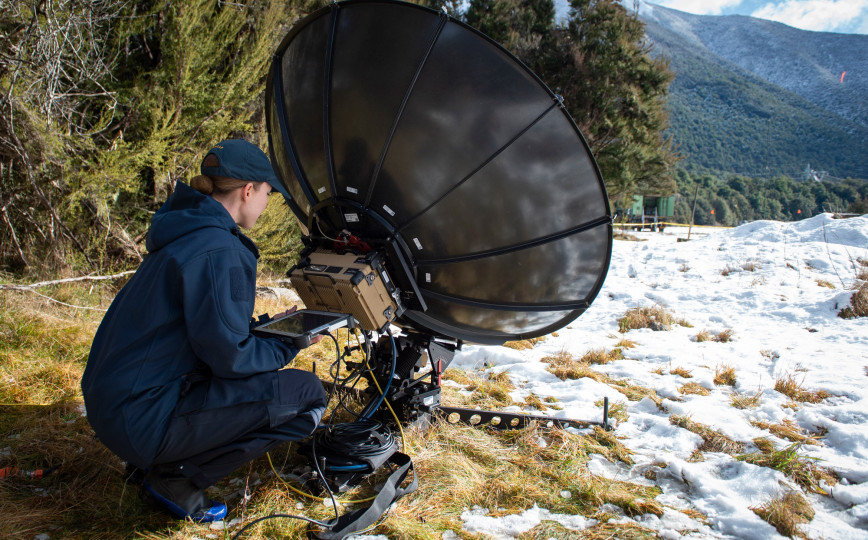
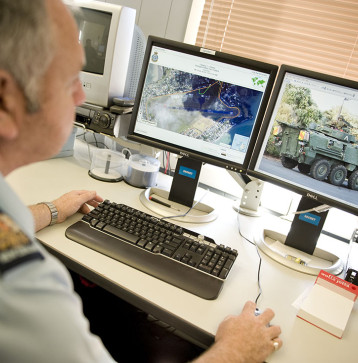
Communications and Information Systems Technician’s (CISTECHs) are experts at providing the information and Communications Technology (ICT) used to interconnect elements of a military force and defend it from electronic and cyber threats within New Zealand and overseas.
Job on base
While on base, as a CISTECH you will provide communications support to RNZAF aircraft using ICT systems coupled with bearer systems (radio and satellite systems) You will enable information to be passed between the aircraft and ground-based IT units, and later on down the track, assist in implementing I.T infrastructure, upgrades and testing new aircraft communications systems.
Working in a team and sometimes as an individual, you will ensure CIS Systems are ready to deploy at a moments notice and that you are trained, ready to provide and defend those operational systems.
Job on deployment
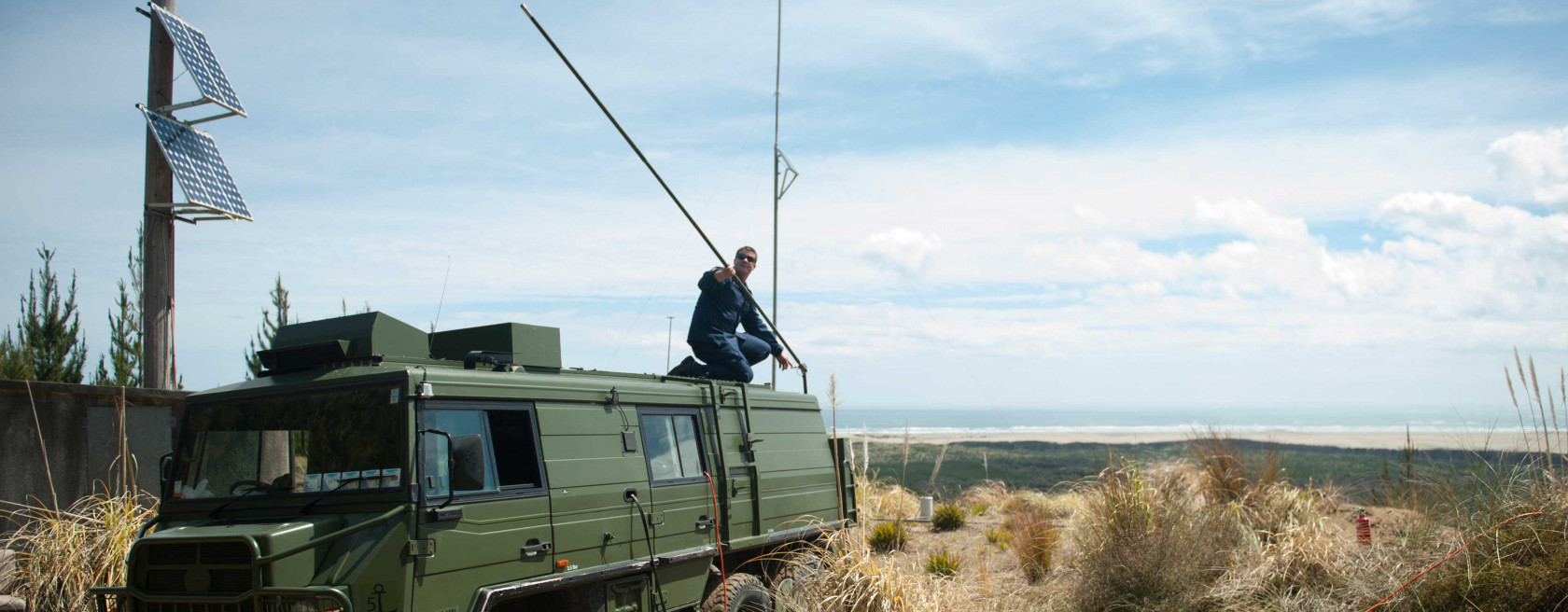
A CISTECH can expect to be one of the first to deploy. You will arrive ahead of the main force to establish vital communication with headquarters (HQ) and to set up other critical information systems for use by the deploying force.
While deployed, a CISTECH will provide ICT, satellite and radio networks to support the functions of command and control, intelligence, logistics and communications. Once setup, you will employ your training to protect and maintain these networks from cyber threats, jamming and interception by adversaries. You will also work with other divisions of the military, as well as external agencies, to ensure the successful achievement of the mission.
To know you can talk up to almost 3000 kilometers away on a piece of wire is really rewarding.
Nicky Logan
CIS Technician

Career progression and training
Career Progression
Basic Training
Job Training
Ongoing Training
Primary and advanced trade training will be completed early in your career, with core military and industry courses conducted throughout your employment. Postings to different RNZAF CIS units every 2-3 years will broaden your experience and consolidate your knowledge with opportunities to deploy on exercises in New Zealand and overseas.
As you advance in rank and with promotion into leadership roles, you will complete quality leadership training and then be assigned greater responsibilities for the management of personnel and equipment.
Upon successful enlistment into the Air Force you’ll be posted to RNZAF Base Woodbourne (near Blenheim).
Here you’ll do 12 weeks of basic military training designed to prepare you for life in the Air Force, and learn various subjects including:
- Organisation and Administration
- RNZAF Customs and Protocol
- Drill and Parades
- Military Field Skills and Weapon Training
- First Aid, and Search and Rescue Techniques
- Physical Fitness
PRIMARY TRADE TRAINING
Upon successful completion of Basic Training, you’ll be posted to RNZAF Base Woodbourne (Blenheim) over a period of approximately 34 weeks. Here you will carry out your Primary Trade Training which will train you in:
- Compliance with NZDF Security
- Theory and practical deployment of radio systems, including Satellite Fundamentals
- Voice procedures for a hostile environment including RNZAF Aircraft and international distress voice procedures
- CISCO IT Essentials, Cisco Certified Network Associate (CCNA) Introduction to Networks and CISCO Introduction to Cybersecurity
- How to deploy as a CIS Mechanic with a final culmination exercise
ON THE JOB TRAINING
Upon successful completion of Primary Trade Training, you will be posted to the mission support No. 230 Squadron, where you will consolidate your knowledge and gain new skills towards becoming a CIS Technician.
This period will be approximately 24 months long, where you will rotate through several sections in Auckland, Ohakea and Wellington. You will also have the opportunity to deploy on exercises in New Zealand and Overseas. Your continuation training will also cover:
- Consolidation of military radio training and procedures
- Specific equipment and networks used with RNZAF Aircraft,
- Specific equipment used in deployable CIS Systems and military satellite,
- CCNA Switching, Routing and Wireless Essentials.
ADVANCED TRADE TRAINING
Upon successful completion of your On the Job Training, you will be posted back to
RNZAF Base Woodbourne for a period of approximately 28 weeks. Advanced Trade Training builds on Primary Trade Training and the experiences you have gained on the job, in the workplace. You will advance your skills in:
- Building, installation, configuration and maintenance of deployable IT Systems
- CCNA Enterprise Networking, Security, and Automation
- Foundation Network Security course and CISCO Cyber Security Essentials
- Engineer and maintain bearer systems
- How to deploy as a CISTECH with a final culmination exercise
Once you successfully complete Advanced Trade Training, you will be a qualified RNZAF CISTECH. Continuous advances in CIS systems and capabilities will offer CISTECHs a dynamic and challenging role in the RNZAF. To keep current, you will receive ongoing training on CIS equipment and military training throughout your career, either at your unit or in a formal training environment. You will have access to ongoing formal training including technologies such as Cisco, Microsoft and Redhat.
From the time you complete your Primary Trade Training, you will under take NZDF driver training courses including: four wheel, light and medium weighted vehicles off road in the deployment of CIS Systems on exercises and operations (will need to develop manual transmission driving skills if successful).
Salary and benefits
Careers in the Air Force are well-rewarded, as well as being diverse and exciting. As you become more experienced and move up through the ranks, gaining additional skills and qualifications, you will see your salary rise accordingly.
$50,597
Under Initial Training
$64,177
Starting Trade Training
$129,061
Future Potential Earnings
Figures updated on July 1st 2023
Benefits and allowances
Earn a competitive salary while training or learning your trade, along with additional allowances for time spent in the field, at sea, overseas, or deployed on operations.
In addition to salary and allowances, other benefits of joining the New Zealand Defence Force include:
Access to your Service marae or tūrangawaewae
Sponsored tertiary study programmes at all levels
Free access to gyms and swimming pools on camp and bases
Opportunities to travel
Free and subsidised medical and dental care
Subsidised food and accomodation on camps and bases
Free and subsidised insurance cover
Help to buy a home and save for retirement
Entry requirements
Basics
Education
Fitness and Medical
Citizenship
Period of Service
- You must be at least 18 years of age at the completion of your recruit course training
- Meet the citizenship & security requirements to gain TSV security clearance for this trade
- Full Drivers Licence but consideration given for Restricted
- You must be medically fit for service.
- You must meet the minimum entry fitness standards.
- Colour perception restrictions may apply.
There are strict citizenship and security requirements to gain the required TSV security clearance for this trade.
Find out if you’re eligible here.
On completion of trade training, there is a return of service period.
Please contact our 0800 number or talk to your Candidate Experience Facilitator for more information.
Ready to start your Air Force career?
Other jobs your might like
You can also browse jobs by specialisation to narrow down your search.
Closing Soon
Closing Soon
Closing Soon